

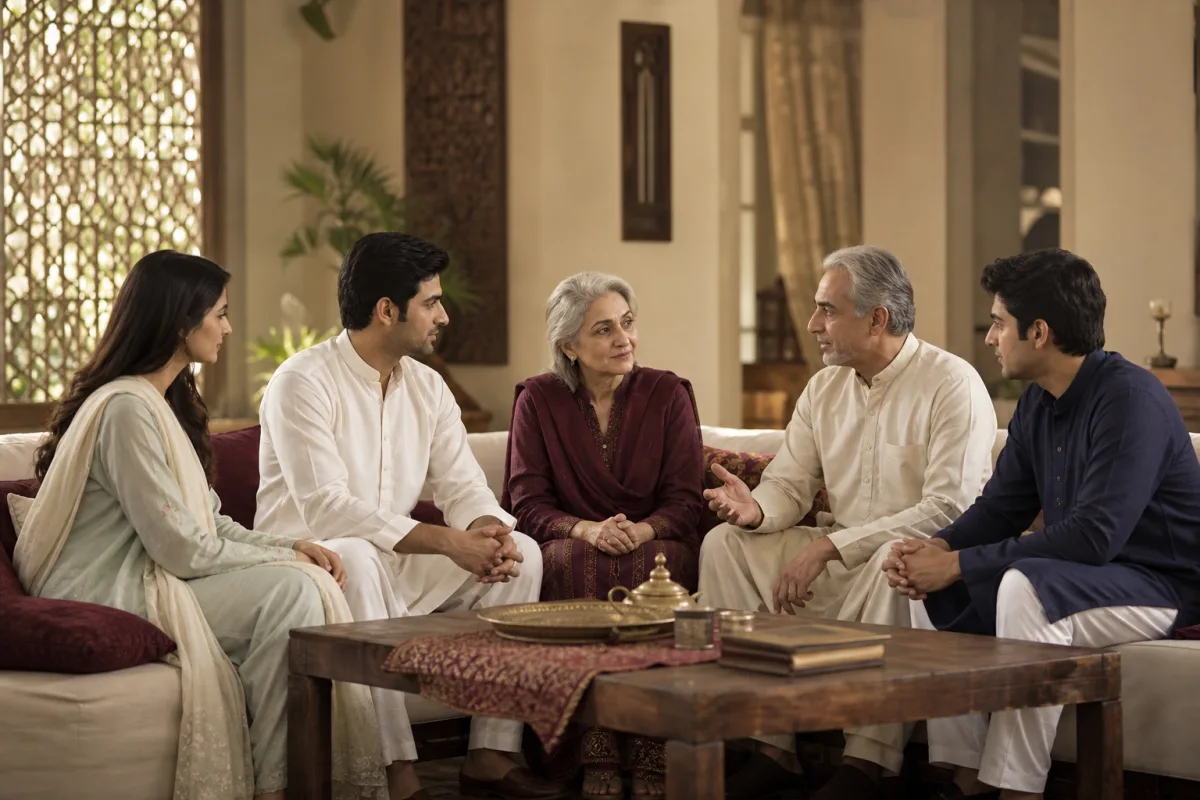
Marriage Is a Decision Between Two People — But It Rarely Exists Outside Family
Marriage is deeply personal, yet in our society it is rarely an entirely private affair.
Marriage, family and the wider context
Two individuals may be choosing one another, but they are also entering families, traditions, expectations, habits, responsibilities, and social environments that existed long before they met. This is why the question is not simply:
“Do these two people like each other?”
A more complete question is:
“Can these two people build a healthy life together while understanding the families and realities that surround them?”
Family involvement can be valuable. Parents often bring experience, perspective, and an ability to notice concerns that younger people may overlook. They may understand family backgrounds, financial realities, social compatibility, or long-term responsibilities in ways that are difficult to appreciate during the excitement of a new proposal.
When support becomes control
The candidate is not an item being negotiated between households. The person whose life will be most affected by the marriage must remain central to the decision.
A representative-led process with candidate consent
A representative may discover a promising profile. A parent may initiate a conversation. Families may conduct background enquiries. But ultimately, the candidate must have meaningful opportunity to understand the proposal, express reservations, ask questions, and decide whether the process should continue.
Respecting family and individual choice
In fact, the strongest marriages are often built when both are present. A family can protect without overpowering. A candidate can exercise choice without disregarding family wisdom. And a matrimonial platform can support both.
Clarity before commitment
It should begin with clarity. That clarity is part of what a misaq — a serious covenant — deserves.

Marriage & Family
Rejection in Matrimonial Search Is Not a Judgment of Human Worth

Marriage & Family
After the Wedding, Families Should Support the Marriage — Not Run It
Marriage & Family
Joint Family or Separate Home? Ask What Daily Life Will Actually Look Like
Marriage & Family