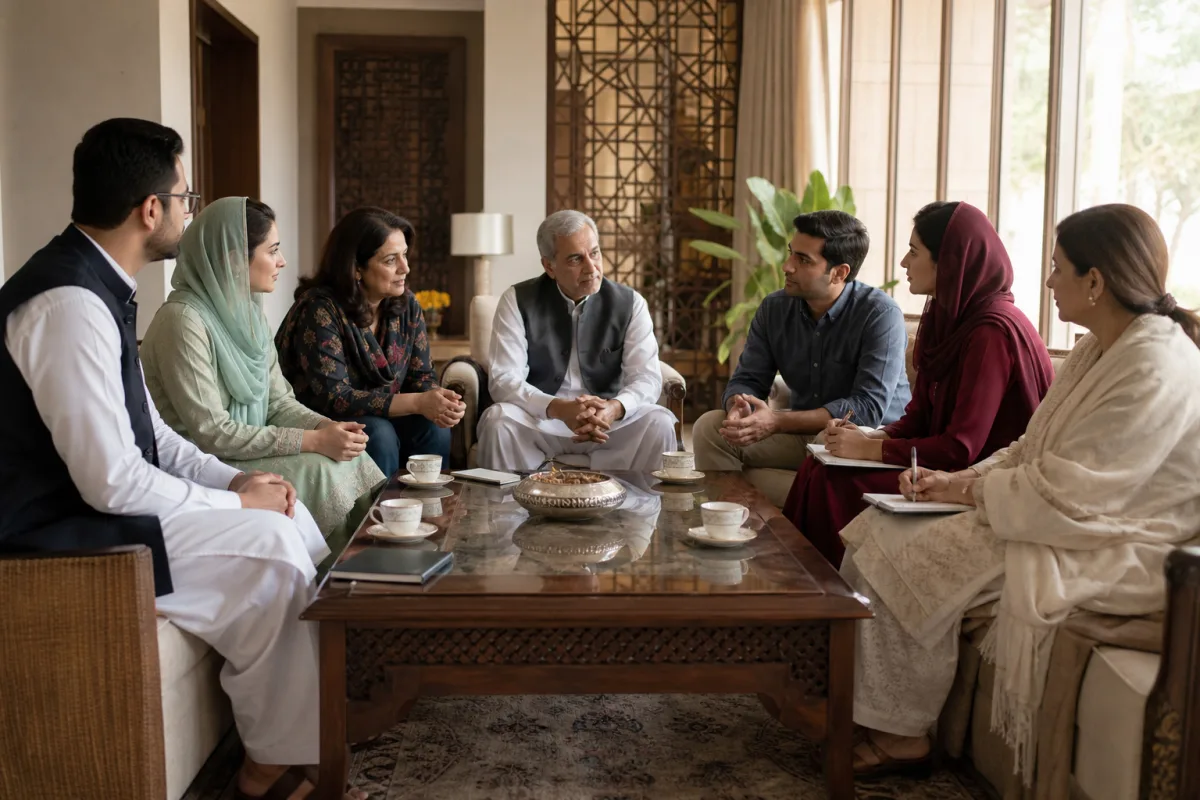
Beyond the checklist
Height. Degree. Profession. Income. Complexion. City. Family status. These details have their place, but when they become the entire conversation, something important is lost: the human being behind the profile. Marriage is not a recruitment exercise. A person cannot be adequately understood through a collection of filters.
What profiles cannot show
One person may value a very close-knit extended family. Another may prefer greater independence. One may see career as a lifelong priority. Another may wish to restructure work after marriage or children. One family may expect frequent social interaction. Another may be private and reserved. None of these preferences are automatically right or wrong.
But they matter.
Describe the life you hope to build
It should also help answer:
“What kind of life am I hoping to build?”
What deserves an honest conversation
- family involvement,
- career expectations,
- financial responsibilities,
- living arrangements,
- religious practice,
- children,
- social life,
- relocation,
- caregiving responsibilities,
- personal boundaries,
- and expectations from a spouse.
Fewer proposals can mean better decisions
That is not necessarily a problem. If clearer information prevents ten unsuitable conversations and leads to one genuinely compatible introduction, the profile has done its job.
Clarity, not attention
It should be to improve the quality of decisions. A profile should therefore not attempt to make someone attractive to everyone. It should help the right people understand them accurately.